Mostrando entradas con la etiqueta Edad de los metales. Mostrar todas las entradas

viernes, 3 de abril de 2020

THE IBERIANS


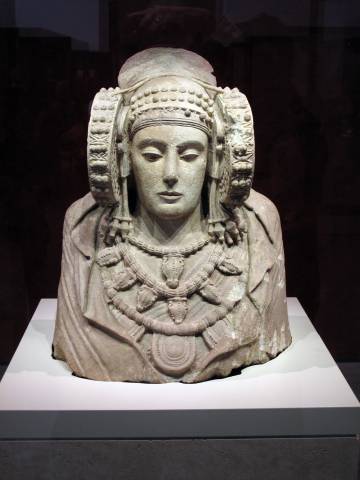
Elche pide su dama | Cultura | EL PAÍS

The Iberians


The Iberian Peninsula was inhabited by different tribes during the Metal Ages, including the Celts, that we have already seen, and the Iberians, who were here before dthe Celts arrived.


The Iberians were the predominant culture of the Iberian Peninsula that inhabited first the east and south-east of Spain and slowly migrated to the interior and west. The Iberians are thought to be a native Mediterranean culture, a local native group.


The Iberians were important during the Metal ages, especially during the Bronze Age. As well as supporting themselves through farming and metalwork, they also traded goods with other Mediterranean cultures. The fact of having contact with other cultures led to developments such as urban settlements. Like the Celts, villages with streets of stone, rectangular buildings were built on hills, with a watchtower for extra protection.Some important goods have remained like great sculptures like the Dama de Elche, the Dama de Baza (both at the MAN Museum in Madrid)  and the Toro de Osuna. They used large rocks to construct megaliths for burials, such as the Cueva de Menga in Antequera (Málaga) or the taulas on the Islas Baleares.


VERY LITTLE IS KNOWN ABOUT THE IBERIAN LANGUAGE, THE ONLY THING EVERYBODY AGREES IS THAT IT IS NOT RELATED TO THE REST OF THE EUROPEAN LANGUAGES. LIKE BASQUE LANGUAGE IT WAS ORIGINAL ON ITS OWN.

_____________________

Los iberos

La Península Ibérica estuvo habitada por diferentes tribus durante la Edad del Metal, incluidos los celtas, que ya hemos visto, y los íberos, que estaban aquí antes de la llegada de los celtas.

Los íberos fueron la cultura predominante de la península ibérica que habitó primero el este y sureste de España y emigró lentamente hacia el interior y el oeste. Se cree que los íberos son una cultura mediterránea nativa, un grupo originario local.

Los íberos fueron muy importantes durante la Edad del Metal, especialmente durante la Edad del Bronce. Además de mantenerse a través de la agricultura y la metalurgia, también comerciaban bienes con otras culturas mediterráneas. El hecho de tener contacto con otras culturas condujo al desarrollo de los asentamientos urbanos. Al igual que los celtas, tenían aldeas con calles de piedra, pero con edificios rectangulares construidos en las colinas, siempre con una torre de vigilancia para mayor protección. Algunos restos importantes se han mantenido como grandes esculturas como la Dama de Elche, la Dama de Baza (ambas en el Museo MAN de Madrid) y el Toro de Osuna. Usaron grandes rocas para construir megalitos para entierros, como la Cueva de Menga en Antequera (Málaga) o las taulas en las Islas Baleares.

SE SABE MUY POCO SOBRE EL IDIOMA IBÉRICO, LO ÚNICO QUE TODOS ESTÁN DE ACUERDO ES QUE NO ESTÁ RELACIONADO CON EL RESTO DE LOS IDIOMAS EUROPEOS. COMO LENGUA VASCA ERA ORIGINAL Y ÚNICA.

HERE YOU HAVE AN INTERESTING VIDEO ABOUT THOSE FOLKS AND TRIBES IN SPANISH!


jueves, 2 de abril de 2020

THE CELTS


The Celts

The Celts spread across Europe during the Iron Age. Those who settled on the Iberian Peninsula lived in the north-west and in central areas. They dwelt in the Iberian Peninsula between 1000 – 300 BC  and spoke a Celtic language.

The Celts mixed with the Iberians and both groups developed in what we call now Celtiberians. Very little remains of the language Celtiberians spoke.

They lived in rural communities. Fortified villages, called castros, were built on hills, a new permanence with stone walls and protective ditches - to prevent surprise attacks. They lived in round houses made of stone and straw.

They were famous for their fierce warrior culture and were very resistant against invaders.They were protected by an elite Celtic warrior class. The Romans, who found them when they invaded, found the Celt warriors to be very independent and courageous in battle and warlike.

Celtic lore of magic and mystery, and the strong bond to nature was very common like in the northern European areas were Celts also dwelt. They worshipped the sun and moon and attached great significance to forests, rivers, wells, and mountains.They practiced similar rituals to those in British Isles and Brittany in France. They venerated especially the oak tree and their worship was carried out in natural sites or clearings rather than temples.

They were into cattle raising on the Iberian plains and hills. They produced their own food through farming and rearing animals. They were also famous for being excellent metalworkers. They created strong weapons, as well as fine jewellery and coins. Archaeologists have found many Celtic structures and artefacts, including iron tools, coins, jewellery and even sculptures such as Los Toros de Guisando.

The buildings housed family and animals together similar to what the Celts did in Scotland, Ireland, and Wales.

___________________________

Los Celtas

Los celtas se extendieron por Europa durante la Edad del Hierro. Los que se establecieron en la Península Ibérica vivían principalmente en el noroeste y en las zonas centrales. Vivieron en la Península Ibérica entre el 1000 y el 300 aC y hablaban una lengua celta.

Los celtas se mezclaron con los íberos y ambos grupos desarrollaron juntos lo que ahora llamamos celtíberos. Quedan muy pocos restos del idioma que hablaban los celtíberos.

Vivían en comunidades rurales. Las aldeas fortificadas, llamadas castros, se construyeron en colinas, un nuevo tipo de estancia con muros de piedra y zanjas protectoras, para evitar ataques sorpresa. Vivían en casas redondas de piedra y paja.

Eran famosos por su feroz cultura guerrera y eran muy resistentes con los invasores. Estaban protegidos por una clase guerrera de élite. Los romanos, que se encontraron con ellos cuando invadieron la península, descubrieron que los guerreros celtas eran muy independientes y valientes tanto en la batalla como en la guerra.

Los celtas en España también practicaban tradiciones mágicas celtas, con sus misterios y un fuerte vínculo con la naturaleza muy común también en los celtas del norte de Europa. Adoraban al sol y la luna y atribuían gran importancia a los bosques, ríos, pozos y montañas. Practicaban rituales similares a los de las Islas Británicas y la Bretaña en Francia. Veneraban especialmente al roble y su culto se realizaba en sitios naturales al aire libre en lugar de en templos.

Se dedicaban a la cría de ganado en las llanuras y colinas ibéricas. Producían su propia comida a través de la agricultura y la cría de animales. También fueron famosos por ser excelentes trabajadores metalúrgicos. Crearon armas fuertes, así como joyas y monedas finas. Los arqueólogos han encontrado muchas estructuras y artefactos celtas, incluidas herramientas de hierro, monedas, joyas e incluso esculturas como Los Toros de Guisando.

Los edificios albergaban a la familia y los animales juntos de forma similar a lo que hicieron los celtas en Escocia, Irlanda y Gales.


lunes, 23 de marzo de 2020

METAL AGES

The cultural record of man’s existence is divided into two great periods – the ‘Age of Stone’ and the ‘Age of Metal’. The ‘Age of Stone’ preceded the ‘Age of metal’. The duration of these two periods lasted very differently. The Stone Age persisted far and far greater period than the Metal Age whereas metal came in use only recently. As people learned to find and use more practical metals, their life changed. We can find three distinct “metal ages” that began toward the end of the Stone Age:

The Copper Age (c 2500 - 1700 BC)
• The main change for humans after using stone and bones was the discovery of metals and their uses.
• The discovery of copper and how to melt it resulted in stronger weapons and tools.
• The transition from the Neolithic to the Bronze Age took experimentation, failure, and innovation, creating a society that actually relied on bronze tools.
• People divided up tasks in their communities: while metal workers made tools and weapons for everyone, farmers produced food for everybody.

The Bronze Age (c 1700 - 800 BC)
• The Bronze Age is the time period when people made tools from an alloy (a mixture of metals) called bronze.
• Bronze is a mixture of mainly copper and tin. People learned how to melt and mix it, giving shape to the mixture.
• They started using bronze weapons and tools that were even stronger than copper ones.
• Bronze tools and weapons soon replaced earlier stone versions.

The Iron Age (c 800 - 280 BC)
• Iron is easy to find, but hard to make into tools. It melts at a higher temperature than bronze. When humans started to know how to make iron tools, they were able to make many of them.
• With more and better tools, people could do harder and better quality weapons and tools  using iron.
• Gold and silver were used to make coins and jewelry.
• People having metals looked rich and wealthy at the time.
• Larger settlements of houses with large hill forts were built for protection.


El registro cultural de la existencia del hombre se divide en dos grandes períodos: la "Edad de Piedra" y la "Edad del Metal". La "Edad de la Piedra" precedió a la "Edad del metal". La duración de estos dos períodos duró de manera muy diferente. La Edad de Piedra persistió durante mucho más tiempo que la Edad del Metal, mientras que la edad del metal es una época mucho más reciente. A medida que las personas aprendieron a encontrar y usar metales más prácticos, su vida cambió. Podemos encontrar tres "edades de metal" distintas que comenzaron hacia el final de la Edad de Piedra:

La Edad del Cobre (c 2500 - 1700 AC)
• El principal cambio para los humanos después de usar piedras y huesos fue el descubrimiento de los metales y sus usos.
• El descubrimiento del cobre y cómo derretirlo les permitió construir armas y herramientas más fuertes.
• La transición del Neolítico a la Edad del Bronce requirió experimentación, fracaso e innovación, creando una sociedad que realmente dependía de las herramientas de bronce.
• Las personas dividieron las tareas en sus comunidades: mientras los trabajadores metalúrgicos fabricaban herramientas y armas para todos, los agricultores producían alimentos.

La Edad de Bronce (c 1700 - 800 AC)
• La Edad del Bronce es el período de tiempo en que las personas fabrican herramientas con una aleación (una mezcla de metales) llamada bronce.
• El bronce es una mezcla de cobre y estaño principalmente. La gente aprendió a derretir y mezclar, dando forma a la mezcla.
• Comenzaron a usar armas y herramientas de bronce que eran incluso más fuertes que las de cobre.
• Las herramientas y armas de bronce pronto reemplazaron las versiones de piedra anteriores.

La Edad de Hierro (c 800 - 280 AC)
• El hierro es fácil de encontrar, pero difícil de convertir en herramientas. Se derrite a una temperatura más alta que el bronce. Cuando los humanos comenzaron a saber cómo hacer herramientas de hierro, pudieron hacer muchas.
• Con más y mejores herramientas, las personas pudieron utilizar armas y herramientas más fuertes y de mejor calidad utilizando hierro.
• El oro y la plata se usaron para hacer monedas y joyas.
• Las personas que tenían metales parecían ricas en aquel momento.
• Se construyeron asentamientos más grandes de casas con grandes fortalezas en las colinas para su protección.

PREHISTORY

We call Prehistory to anything that happened before the invention of writing. The word comes from the Ancient Greek words προ (pre = "before") and ιστορία (historia = "history"). Little is known about prehistoric people because there are no written records that we can use to study. Finding out about pre-history is done by archaeologist. This means that those people study objects like tools, bones, buildings and cave painting. Pre-history ends at different times in different places when people began to write. Historians divide the Prehistory period into smaller periods, depending on the type of materials and technology that humans used in those times. These are called the Stone Age and the Metal Ages.


_______________________

Llamamos Prehistoria a todo lo que sucedió antes de la invención de la escritura. La palabra proviene de las palabras griegas antiguas προ (pre = "before") y ιστορία (historia = "history"). Poco se sabe sobre las personas prehistóricas porque no hay registros escritos que podamos usar para estudiar. La información sobre la prehistoria la realiza un arqueólogo. Esto significa que esas personas estudian objetos como herramientas, huesos, edificios y pintura rupestre. La prehistoria termina en diferentes momentos en diferentes lugares cuando la gente comenzó a escribir. Los historiadores dividen el período de la prehistoria en períodos más pequeños, dependiendo del tipo de materiales y tecnología que los humanos usaban en esos tiempos. Estos se llaman la Edad de Piedra y la Edad del Metal.


Resultado de imagen de prehistoric humans national geographic
PHOTOGRAPH BY JOE MCNALLY, NAT GEO IMAGE COLLECTION