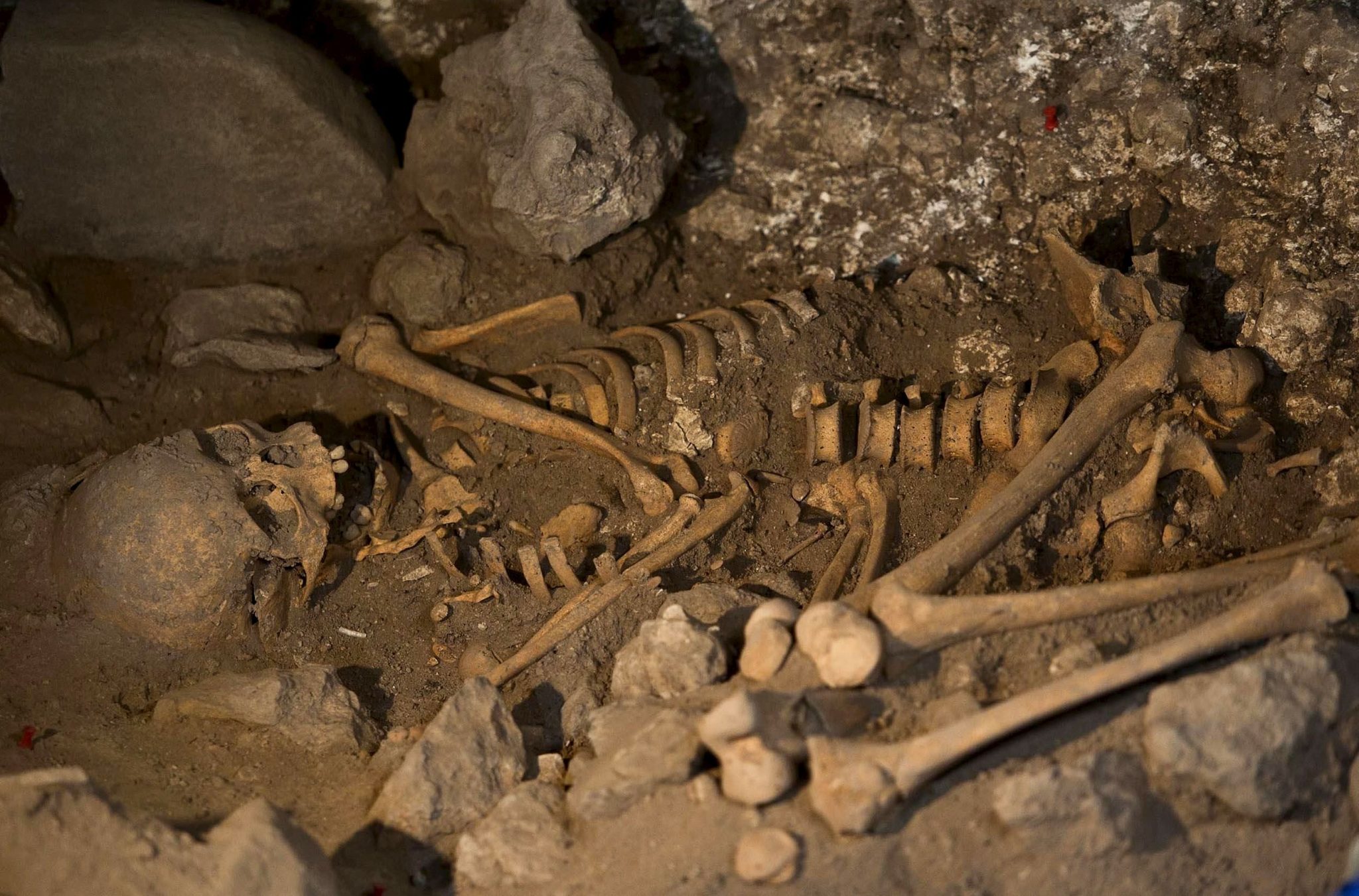
The Sima de los Huesos in Atapuerca, Burgos, contains the oldest human remains in Spain. Scientists think they could be up to 400 000 years old.
Atapuerca marks a before and after in the odyssey of human evolution. It is considered one of the most important scientific discoveries in history and has been declared a World Heritage Site by Unesco, the archaeological complex of Atapuerca brings together the largest and most impressive testimonies of the origin of mankind.
___________________
La Sima de los Huesos en Atapuerca, Burgos, contiene los restos humanos más antiguos de España. Los científicos piensan que podrían tener hasta 400 000 años.
Atapuerca marca un antes y un después en la odisea de la evolución humana. Considerado uno de los descubrimientos científicos más importantes y declarado Patrimonio de la Humanidad por la Unesco, el complejo arqueológico de Atapuerca reúne los testimonios más grandes e impresionantes del origen de la humanidad.
Human Remains at Atapuerca
And here you have a Tadeo Jones video about Atapuerca!
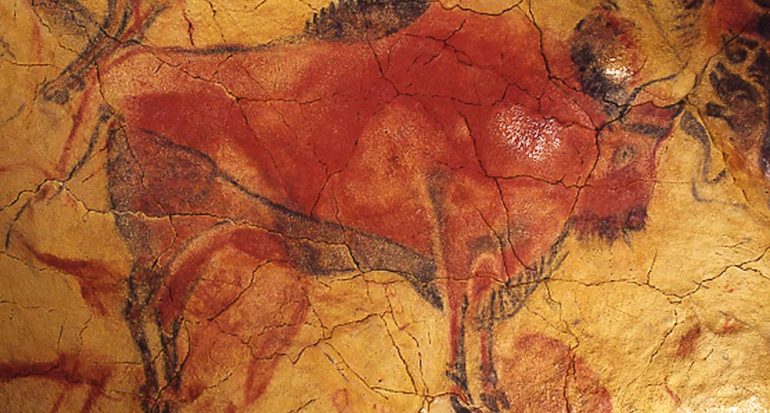
Altamira (Spanish for 'high view') is a cave in Spain famous for its Paleolithic cave paintings.The cave has an irregular shape and is approximately 300 meters long and inside we can see drawings and coloured paintings.The drawings are about 14,000 years old and show wild mammals like bison, deer, boars, horses etc. and human hands.They were painted using natural, red-coloured ochre and outlined in black. It is located near the town of Santillana del Mar in Cantabria, Spain, not far from the city of Santander. The cave with its paintings has been declared a World Heritage Site by UNESCO.
Through the videos of "Altamira, the animated cave" to which you can access at this link, you can get to know the Altamira cave during the Paleolithic. A virtual experience that takes us back to the very moment when the famous polychrome bison were being painted and, as if we were sneaking in there and we could be privileged witnesses of that special moment.
Altamira es una cueva en España famosa por sus pinturas rupestres paleolíticas. La cueva tiene una forma irregular y tiene aproximadamente 300 metros de largo y en su interior podemos ver dibujos y pinturas de colores. Los dibujos tienen aproximadamente 14,000 años de antigüedad y muestran mamíferos salvajes como bisontes, ciervos, jabalíes, caballos, etc. y manos humanas. Fueron pintados con ocre natural de color rojo y delineados en negro. Se encuentra cerca de la ciudad de Santillana del Mar en Cantabria, España, no muy lejos de la ciudad de Santander. La cueva con sus pinturas ha sido declarada Patrimonio de la Humanidad por la UNESCO.
A través de los videos de Altamira, la cueva animada, a los que puedes acceder en este enlace podemos conocer la cueva de Altamira durante el Paleolítico. Una experiencia virtual que nos traslada al mismo momento en que se estaban pintando los famosos bisontes polícromos y, como si nos coláramos allí dentro y pudiéramos ser testigos privilegiados de ese momento tan especial.
The Stone Age is divided into Paleolithic, Mesolithic and Neolithic periods.
1. The Paleolithic Period (c.2500000 - 10000 BC)
• Paleolithic means “old stone age.” This is te beginning of human history.
• The Paleolithic is by far the longest period of humanity's time, about 99% of human history. So it was a very very long period.
• People moved around to find animals or animal products (eggs) and plants (fruits, leaves, roots...) to eat. They were hunter-gatherers.
• They were nomads. It means that housing was temporary and they moved from one place into another looking for places that fitted their necesites. First they lived in caves and later they used simple materials to build tiny huts.
• They used simple materials like stone, bone and wood to make human's first tools.
• Later in time people learned to use fire.
2. The Mesolithic Period (c.10000 - 5500 BC)
• Mesolithic means “middle stone age.” It is the transition period between the Paleolithic and the Neolithic. It was a gradual process.
• During this period we saw the development of finer, smaller stone tools such as arrows or spear heads. Stone tools not only cut, but also polished.
• The first evidence for "homes" in many European places comes from this period.
• The first canoes or simple boats were made also during this period. This meant that humans started to fish and hunt.
• The dog was also domesticated during this period, probably by the breeding of the least aggressive wolves.
3. The Neolithic Period (c.5500 - 2500 BC)
• Neolithic means “new stone age.” It is the beginning of sedentary life for humans.
• This Era saw the beginnings of agriculture. People became farmers. They cultivated crops and domesticated animals.
• Villages were formed near sources of water.
• Animals such as cows and sheep were domesticated and provided peoples with meat, milk, wool, leather and bone.
• Farming tools were made of stone and also of wood, leather and bone, as animals had been domesticated.
• People started to make pottery for storage.
____________________
La Edad de Piedra se divide en periodos paleolíticos, mesolíticos y neolíticos.
1. El período paleolítico (c.2500000 - 10000 AC)
• Paleolítico significa "edad de piedra". Este es el comienzo de la historia humana.
• El Paleolítico es, con mucho, el período más largo del tiempo de la humanidad, aproximadamente el 99% de la historia humana. Fue un período muy muy largo.
• La gente se movía para encontrar animales o productos de origen animal (huevos) y plantas (frutas, hojas, raíces ...) para comer. Eran cazadores-recolectores.
• Eran nómadas. Significa que la vivienda era temporal y se trasladaban de un lugar a otro en busca de lugares que se ajustaran a sus necesidades. Primero vivieron en cuevas y luego usaron materiales simples para construir pequeñas chozas.
• Utilizaban materiales simples como piedra, hueso y madera para hacer las primeras herramientas humanas.
• Más tarde, la gente aprendió a usar el fuego.
2. El período mesolítico (c.10000 - 5500 AC)
• Mesolítico significa "la edad de piedra media". Es el período de transición entre el paleolítico y el neolítico. Fue un proceso gradual.
• Durante este período vimos el desarrollo de herramientas de piedra más pequeñas y finas, como flechas o puntas de lanza. Las herramientas de piedra no solo cortan, sino que también se pulen.
• La primera evidencia de "hogares" en muchos lugares europeos proviene de este período.
• Las primeras canoas o botes simples también se hicieron durante este período. Esto significaba que los humanos comenzaron a pescar y cazar.
• El perro también fue domesticado durante este período, probablemente por la cría de los lobos menos agresivos.
3. El período neolítico (c.5500 - 2500 AC)
• Neolítico significa "nueva edad de piedra". Es el comienzo de la vida sedentaria para los humanos.
• Esta era vio los inicios de la agricultura. Las personas se convirtieron en granjeros. Cultivaban plantas y domesticaron animales.
• Se formaron aldeas cerca de las fuentes de agua.
• Los animales como las vacas y las ovejas fueron domesticados y proporcionaron a los pueblos carne, leche, lana, cuero y huesos.
• Las herramientas agrícolas estaban hechas de piedra y también de madera, cuero y hueso, ya que los animales habían sido domesticados.
• La gente comenzó a hacer cerámica para el almacenamiento.
¡Disfruta de los videos sobre el paleolítico y el neolítico!
Imagen de la pintura rupestre de un Bisonte Macho Erguido en Las Cuevas de Altamira
We call Prehistory to anything that happened before the invention of writing. The word comes from the Ancient Greek words προ (pre = "before") and ιστορία (historia = "history"). Little is known about prehistoric people because there are no written records that we can use to study. Finding out about pre-history is done by archaeologist. This means that those people study objects like tools, bones, buildings and cave painting. Pre-history ends at different times in different places when people began to write. Historians divide the Prehistory period into smaller periods, depending on the type of materials and technology that humans used in those times. These are called the Stone Age and the Metal Ages.
_______________________
Llamamos Prehistoria a todo lo que sucedió antes de la invención de la escritura. La palabra proviene de las palabras griegas antiguas προ (pre = "before") y ιστορία (historia = "history"). Poco se sabe sobre las personas prehistóricas porque no hay registros escritos que podamos usar para estudiar. La información sobre la prehistoria la realiza un arqueólogo. Esto significa que esas personas estudian objetos como herramientas, huesos, edificios y pintura rupestre. La prehistoria termina en diferentes momentos en diferentes lugares cuando la gente comenzó a escribir. Los historiadores dividen el período de la prehistoria en períodos más pequeños, dependiendo del tipo de materiales y tecnología que los humanos usaban en esos tiempos. Estos se llaman la Edad de Piedra y la Edad del Metal.
PHOTOGRAPH BY JOE MCNALLY, NAT GEO IMAGE COLLECTION